
What white supremacy has to do with Canada's podcasters.
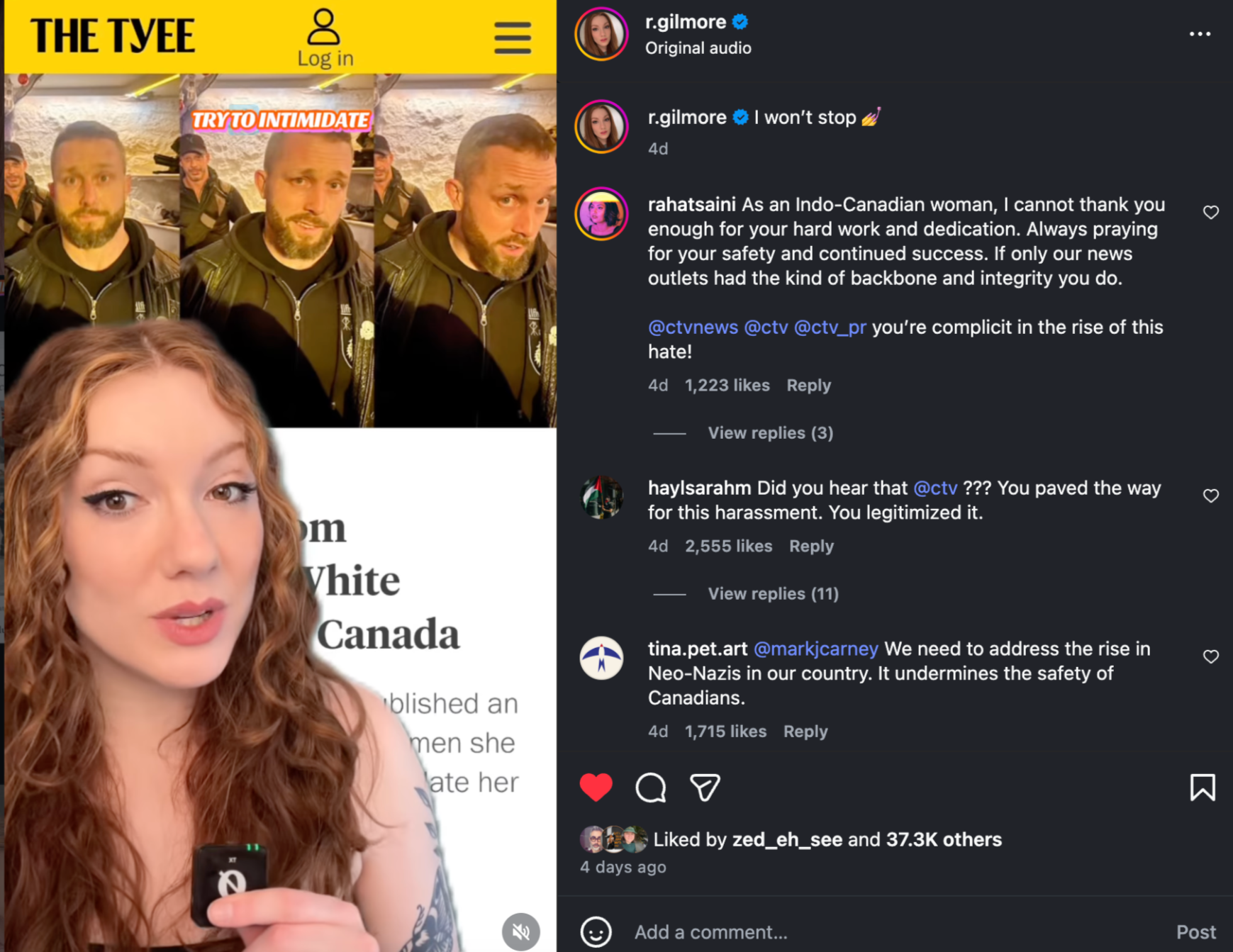
Let’s be frank: A Canadian independent journalist has been threatened by white surpremacists.
This month, independent journalist and host of BUBBLE POP, Rachel Gilmore, was confronted by some of the individuals featured in a story she had written.
This story covers the growing white nationalist active clubs covertly meeting (and training in preparation of violence) in Canadian gyms across the country. It unmasked many notable members, which ultimately lead to one of these clubs being banned from the gym it frequented. But in a terrifying situation on March 4th, two of the men from that club showed up to a venue Rachel was hanging out at, attempting to intimidate her. In the days since, members of affiliated active clubs claimed to know her home address, deepfaked her loved ones, and even spread sexualized cartoons of her online.
So what’s this got to do with Canadian podcasting?
Rachel is a member of our Canadian podcasting community, full stop. But even futher, Canadian journalists and podcasts only continue to become inextricably linked, especially as more and more journalists like Rachel start to build media outlets of their own with podcasts. But the accessibility of podcasts consequently puts plenty of its creators, especially those who speak out against hate, at risk of harrassment and dangerous parasocial relationships.
So the question on my mind is: who’s next?
On a recent panel at PodcampTO, Mi’kmaw lawyer, professor, and human rights advocate, Pam Palmater (WARRIOR LIFE), spoke about the numerous threats she’s received from her podcast — just one of many other dangerous instances that the Canadian Association of Journalists (CAJ) says is on the rise. “Numerous reports produced over the past several years have documented the degree to which hate and harassment against journalists, particularly women journalists and journalists of colour, is on the rise in both Canada and around the world.” And while the CAJ and several other press freedom institutions have assembled resources that help journalists protect themselves, in the Canadian podcasting landscape, protection support for creators is hard to find.
For podcasters and journalists alike, standing up to hate comes with a cost. But as Rachel says, “that cost highlights exactly why this work is so important.”
In a follow up story, Rachel powerfully pointed out that, despite putting herself at risk, unmasking these men is actively disrupting the white nationalist movement — even Alex Vriend himself, vice-president of the Second Sons Canada, let that fact slip.
From Rachel’s story; “‘The real threat that we face is social pressure and ostracization, and that’s the weapon that they use,’ [Vriend] told other listeners of an X Spaces call on March 5. ‘It’s about pressuring you into stopping what you’re doing, especially if you’re effective.’”
So here’s a call-to-action to the Canadian podcast ecosystem:
Continue to call out hate speech on your podcasts. We must use our voices to be anti-racist and speak against violence, injustice and inequality.
Encourage your audiences to be educated and engaged in anti-racism work, and to take action.
Support the independent creators doing anti-hate work, both loudly and financially. Leave 5-star reviews on their podcasts, comment on their posts, and support their paid tiers whenever possible (help them put food on the table).